Understanding the origin and distribution of Coastal Redwood Wood
페이지 정보
작성자 Hollie Mccollum 작성일25-03-28 18:39 조회6회 댓글0건관련링크
본문
Large dried-shocked trees of The West Coast, particularly the types known as Sequoia sempervirens, are included the world's most prized timber sources due to their rich color and long-lasting nature. But the origin and movement of coastal redwood timber is a complicated process that has been the subject of controversy in recent periods.
The main sources of coastal redwood timber are California and Oregon in the United States, as well as parts of The Land Down Under and New Zealand. In the past, trees were harvested for their wood mainly in Northern California, especially around the Redwood National and State Parks.
The majority of the logging taking place in this region in the five-decade century involved hacking, which involved cutting down big areas of forest and restoring the area with less valuable types to grow quicker and optimize yield.
However, due to increasing worries about the ecological and social impacts of this method, many of The Redwood Region's old-growth coastal redwood forests have been defended by federal and state governments since the 1960s and 1970s.
This has shifted the focus of redwood gathering towards commercially-managed plantations and sustainably-managed personal lands.
{In addition|As well as] to these {traditional|established} sources, a {growing|increasing} number of companies are now {sourcing|originating} redwood {timber|wood} from {plantations|farms} in South America, Africa, and Asia. {These plantations|These farms) often prioritize quick growth and high yields, raising concerns about the impact on {biodiversity|ecosystems} and {ecosystems|environments}.
{Once|After} the redwood {timber|wood} has {been|been} {harvested|gathered}, it is {processed|treated} and {prepared|readied} for {distribution|movement} through a {complex|complicated} {network|system} of {suppliers|providers}, {manufacturers|makers}, and {distributors|shippers}. {This|This often involves} multiple {steps|actions}, including {sawmilling|cutting}, {planing|smoothing}, and {kiln drying|desiccating}, before the final product is {ready|prepared} for {sale|purchase} to {retailers|merchants} and {builders|architects}.
{There are|Among these} several key {players|actors} involved in the {distribution|movement} of redwood {timber|wood}, including {manufacturers|makers}, {wholesalers|regardless}, and {retailers|merchants}. {In addition|As well as} to this, there are {many|numerous} smaller companies and {individual|personal} {suppliers|providers} who also {play|participate} a crucial {role|part} in {connecting|linking} {buyers|purchasers} and {sellers|venders} in the industry.
{Despite|However} the {controversies|debates} surrounding the {sourcing|origin} and {distribution|movement} of redwood {timber|wood}, the industry continues to {evolve|develop} and {adapt|adjust} to {changing|transforming} {markets|businesses} and {regulations|laws}. {Many|Numerous} companies are now prioritizing {sustainable|eco-friendly} {forestry|woodland} practices and {certification|verification} schemes such as the Forest Stewardship Council (FSC), which ensures that wood products are sourced from forests that are {managed|regulated} in a {socially|compassionately} and {environmentally|ecologically} {responsible|accountable} way.
{Understanding|Learning} the {sourcing|origin} and вагонка штиль из лиственницы купить {distribution|movement} of redwood {timber|wood} is {essential|crucial} for {consumers|customers} who want to {ensure|guarantee} that they are buying from companies that prioritize {sustainability|eco-friendliness} and environmental responsibility. {By|Through] supporting {manufacturers|makers} and {suppliers|providers} who adhere to strict {environmental|ecological} and {social|human} standards, {consumers|customers} can help to {promote|encourage} more {responsible|accountable} forestry practices and {contribute|participate} to the {long-term|extended} {health|welfare} of the world's forests.
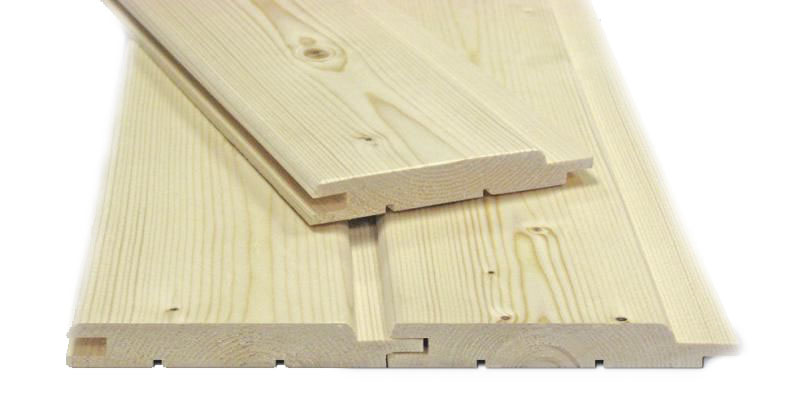 {For|To} {consumers|customers} who want to {avoid|steer clear of} products made from old-growth or {cleared|deforested} forests, there are {many|numerous} options for buying {furniture|built-in} pieces, decking, and other wood products made from {sustainably|eco-friendly} sourced redwood. {By|Through] choosing companies that prioritize {sustainability|eco-friendliness}, {consumers|customers} can {enjoy|appreciate} the {aesthetic|visual} and {durability|longevity} benefits of redwood {timber|wood} while also supporting {responsible|accountable} forestry practices that benefit both people and the planet.
The main sources of coastal redwood timber are California and Oregon in the United States, as well as parts of The Land Down Under and New Zealand. In the past, trees were harvested for their wood mainly in Northern California, especially around the Redwood National and State Parks.
The majority of the logging taking place in this region in the five-decade century involved hacking, which involved cutting down big areas of forest and restoring the area with less valuable types to grow quicker and optimize yield.
However, due to increasing worries about the ecological and social impacts of this method, many of The Redwood Region's old-growth coastal redwood forests have been defended by federal and state governments since the 1960s and 1970s.
This has shifted the focus of redwood gathering towards commercially-managed plantations and sustainably-managed personal lands.
{In addition|As well as] to these {traditional|established} sources, a {growing|increasing} number of companies are now {sourcing|originating} redwood {timber|wood} from {plantations|farms} in South America, Africa, and Asia. {These plantations|These farms) often prioritize quick growth and high yields, raising concerns about the impact on {biodiversity|ecosystems} and {ecosystems|environments}.
{Once|After} the redwood {timber|wood} has {been|been} {harvested|gathered}, it is {processed|treated} and {prepared|readied} for {distribution|movement} through a {complex|complicated} {network|system} of {suppliers|providers}, {manufacturers|makers}, and {distributors|shippers}. {This|This often involves} multiple {steps|actions}, including {sawmilling|cutting}, {planing|smoothing}, and {kiln drying|desiccating}, before the final product is {ready|prepared} for {sale|purchase} to {retailers|merchants} and {builders|architects}.
{There are|Among these} several key {players|actors} involved in the {distribution|movement} of redwood {timber|wood}, including {manufacturers|makers}, {wholesalers|regardless}, and {retailers|merchants}. {In addition|As well as} to this, there are {many|numerous} smaller companies and {individual|personal} {suppliers|providers} who also {play|participate} a crucial {role|part} in {connecting|linking} {buyers|purchasers} and {sellers|venders} in the industry.
{Despite|However} the {controversies|debates} surrounding the {sourcing|origin} and {distribution|movement} of redwood {timber|wood}, the industry continues to {evolve|develop} and {adapt|adjust} to {changing|transforming} {markets|businesses} and {regulations|laws}. {Many|Numerous} companies are now prioritizing {sustainable|eco-friendly} {forestry|woodland} practices and {certification|verification} schemes such as the Forest Stewardship Council (FSC), which ensures that wood products are sourced from forests that are {managed|regulated} in a {socially|compassionately} and {environmentally|ecologically} {responsible|accountable} way.
{Understanding|Learning} the {sourcing|origin} and вагонка штиль из лиственницы купить {distribution|movement} of redwood {timber|wood} is {essential|crucial} for {consumers|customers} who want to {ensure|guarantee} that they are buying from companies that prioritize {sustainability|eco-friendliness} and environmental responsibility. {By|Through] supporting {manufacturers|makers} and {suppliers|providers} who adhere to strict {environmental|ecological} and {social|human} standards, {consumers|customers} can help to {promote|encourage} more {responsible|accountable} forestry practices and {contribute|participate} to the {long-term|extended} {health|welfare} of the world's forests.
{For|To} {consumers|customers} who want to {avoid|steer clear of} products made from old-growth or {cleared|deforested} forests, there are {many|numerous} options for buying {furniture|built-in} pieces, decking, and other wood products made from {sustainably|eco-friendly} sourced redwood. {By|Through] choosing companies that prioritize {sustainability|eco-friendliness}, {consumers|customers} can {enjoy|appreciate} the {aesthetic|visual} and {durability|longevity} benefits of redwood {timber|wood} while also supporting {responsible|accountable} forestry practices that benefit both people and the planet.댓글목록
등록된 댓글이 없습니다.